

2024 January / Lead Designer
Building a Co-Learning Community for Designers at Slalom Build
Led a design study group at Slalom that grew from 8 to 30+ participants, fostering a strong culture of continuous learning and community.
How it Began
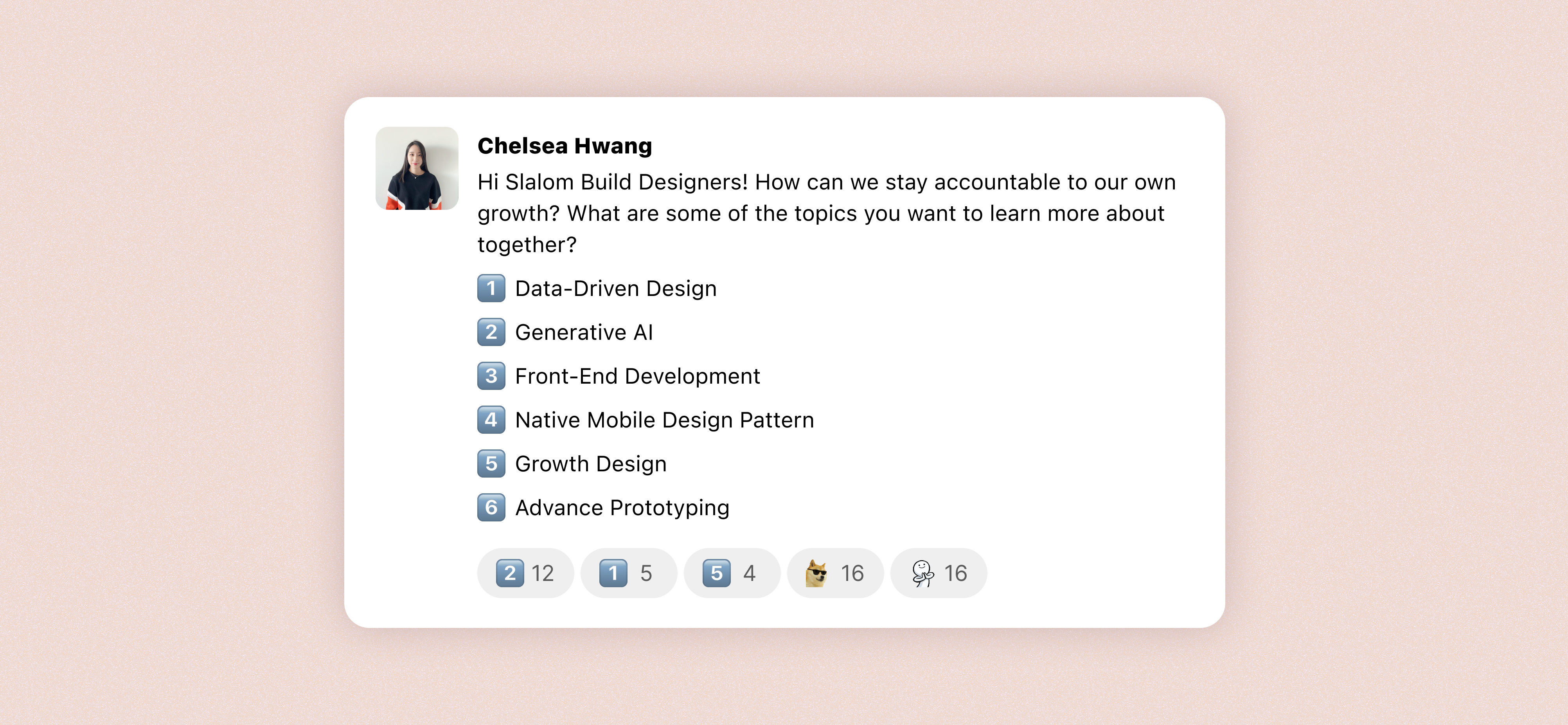
How Do We Stay Accountable to Our Own Growth?
As a senior experience designer, I found myself and my peers often reflecting on areas we wanted to improve—facilitation, coding, prototyping—but struggling to make space for it amidst fast-paced consulting work. It became clear that many of us were trying to grow in isolation. I began to wonder: what if we could grow together?
From a Shared Idea to a Designer Learning Community
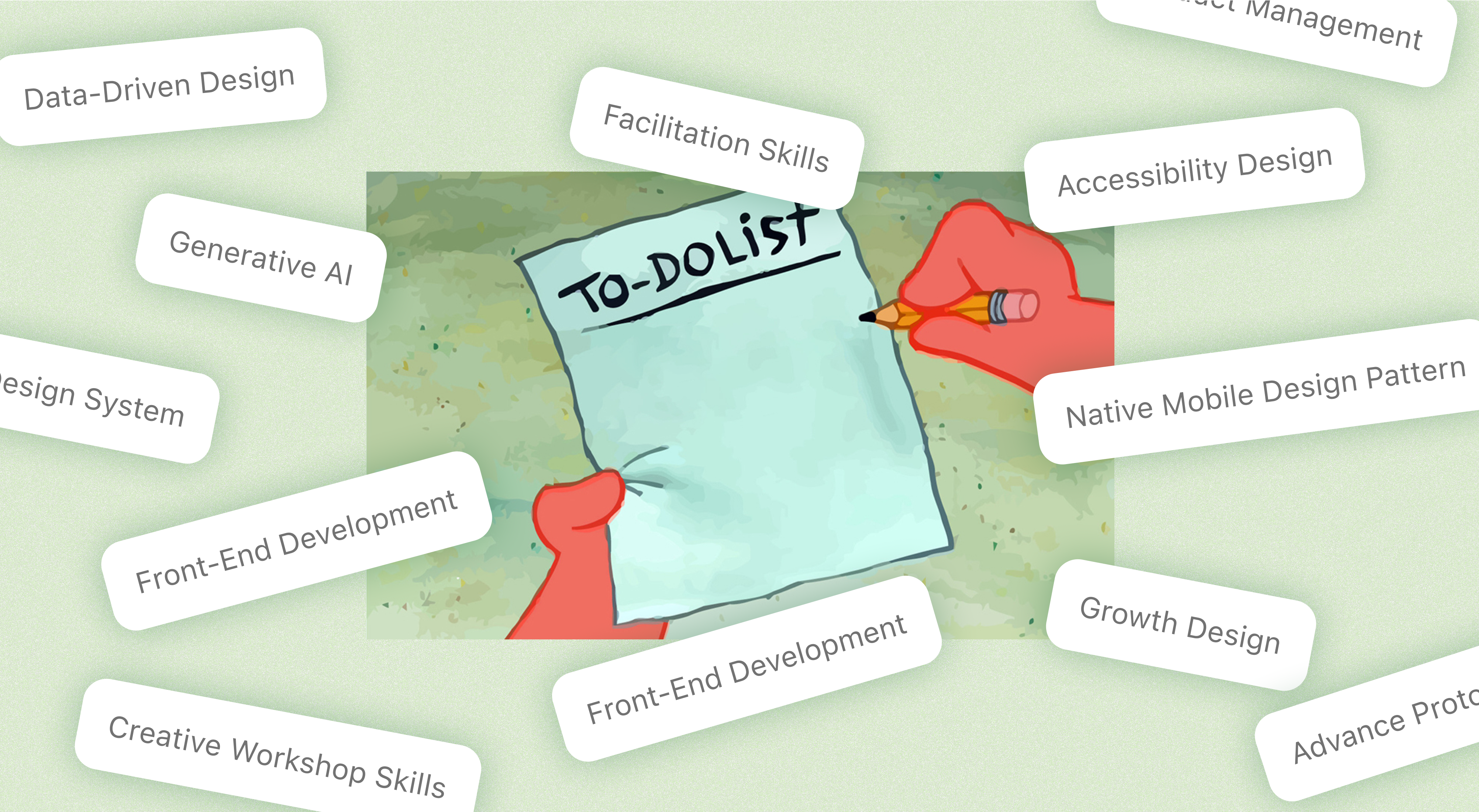
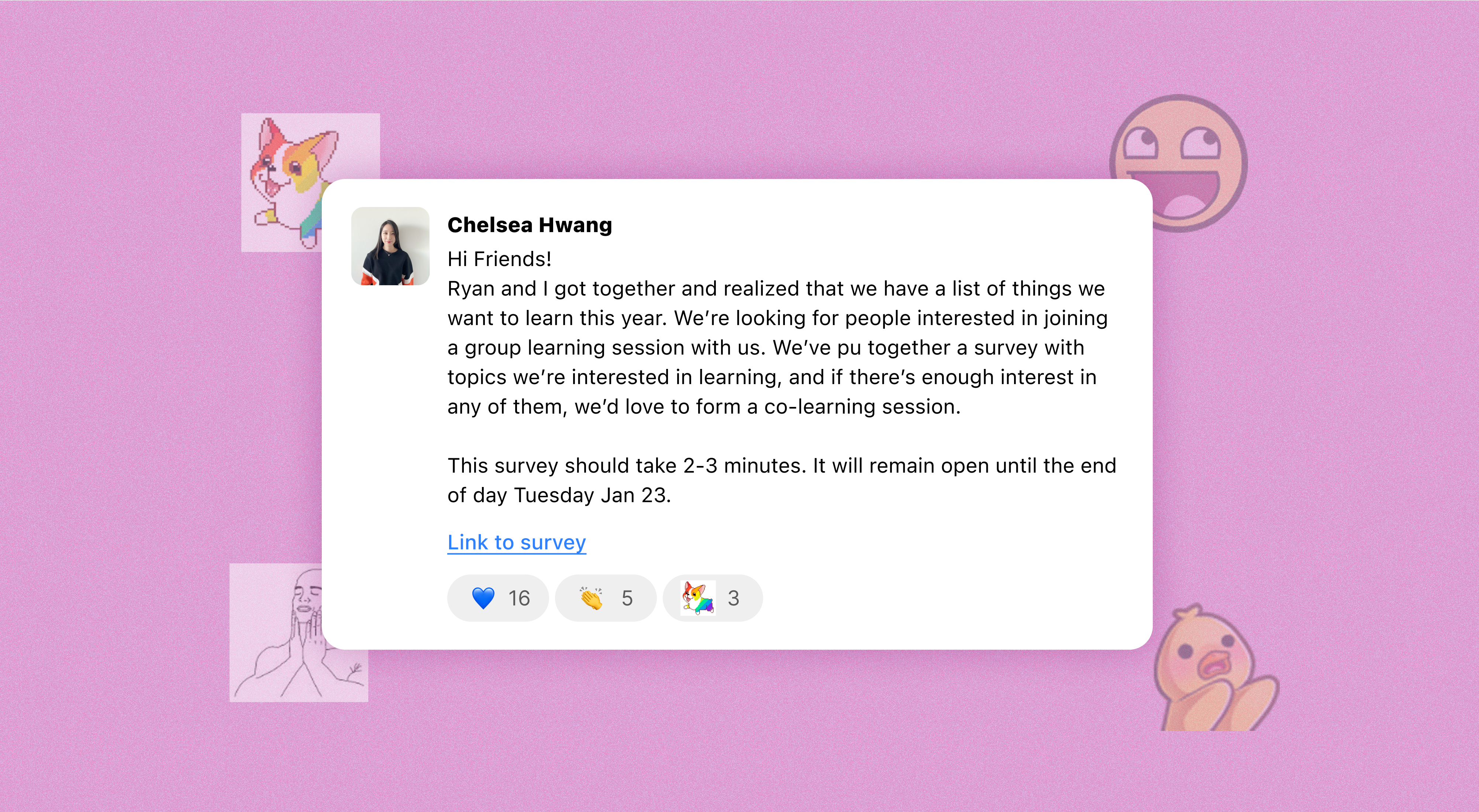
I reached out to my colleague Ryan to share an idea: what if we created a lightweight co-learning group where designers could grow together? We were both looking to improve in areas like facilitation, Figma prototyping, and leveraging AI—but we also wondered what other designers were curious about. Rather than guessing, we decided to ask.
We shared it through Slalom’s monthly design announcements, and thanks to that channel, we saw about a 20% response rate—around 25 designers. The results pointed to a clear theme: AI was top of mind. This was early 2024, and with the rapid rise of generative tools, designers were eager to explore how AI could support their workflows.
Designing for Flexibility in a Fast-Paced Consulting Environment
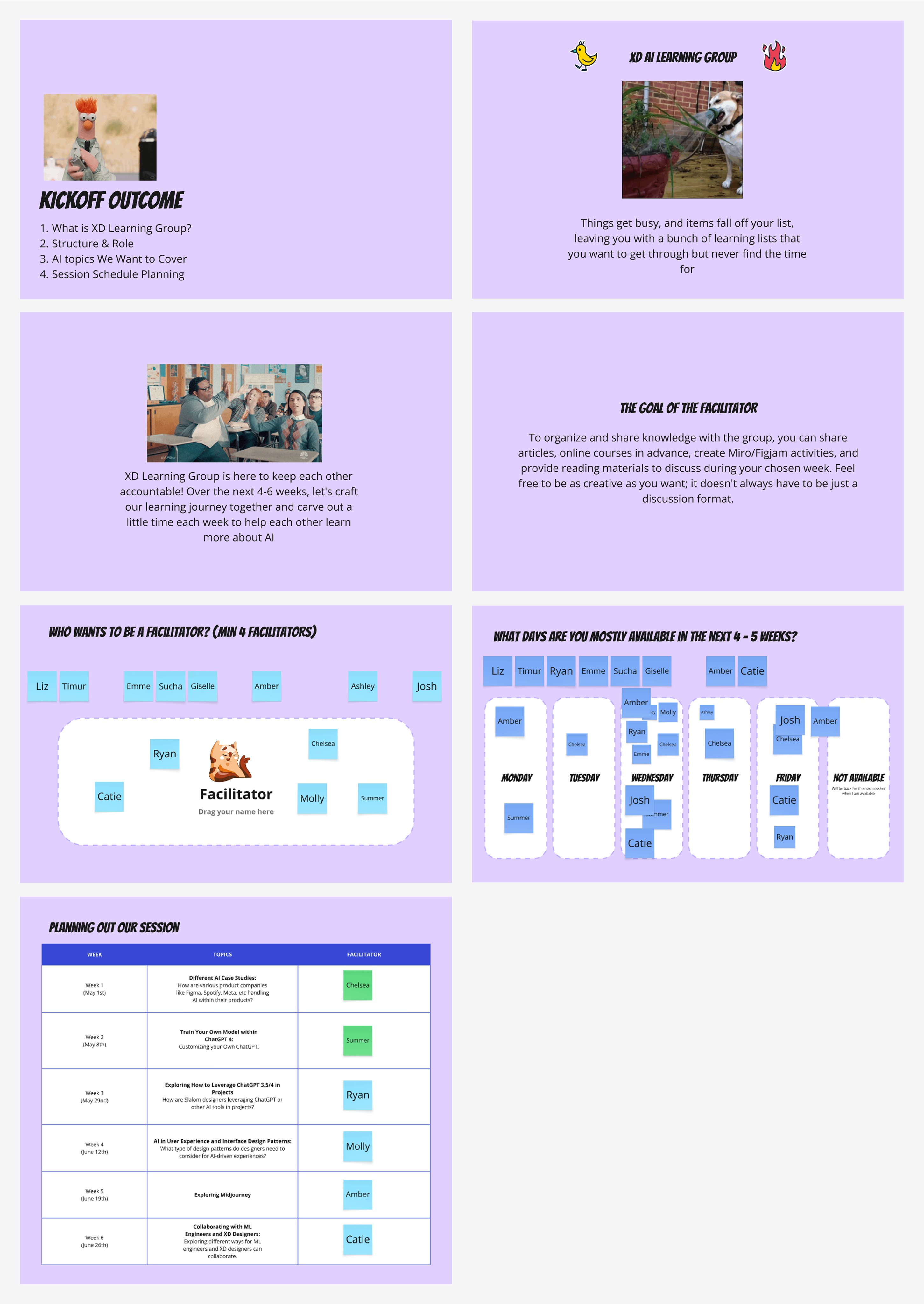
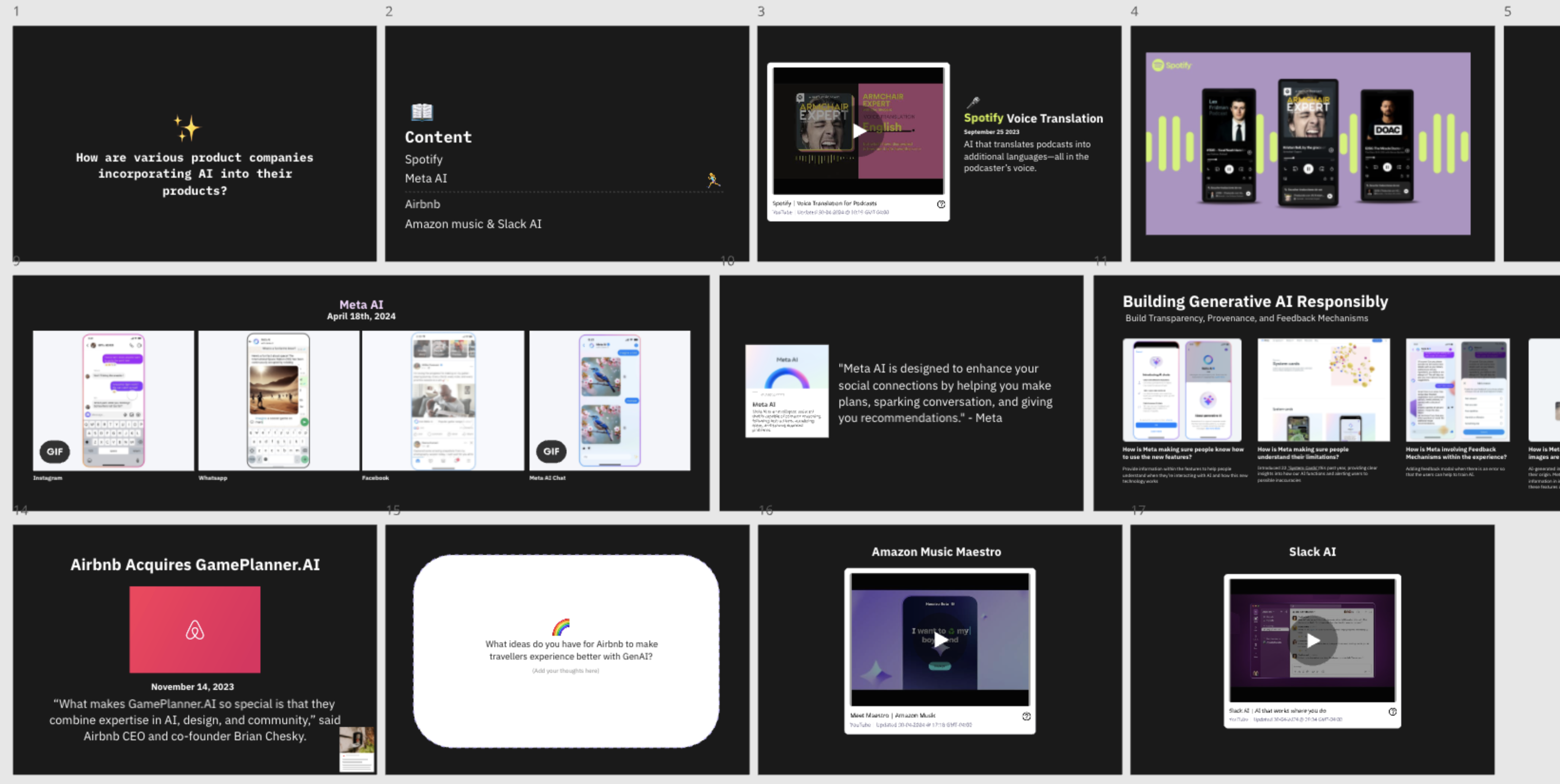
Rather than over-engineering the format, we kept it lightweight and adaptable. Our first AI-focused session brought together 8 designers. Aware of the challenges in coordinating across time zones and client demands, we structured the sessions to be flexible and low-lift. To kick things off, Ryan and I organized a quick, focused workshop to guide the conversation in our first session.
The Role of Facilitators in Driving Productive Sessions
Recognizing the importance of structured guidance in collaborative settings, we incorporated facilitators into our sessions. Each session was led by a volunteer facilitator who guided discussions, encouraged participation, and ensured that sessions remained productive and inclusive.
Outcomes
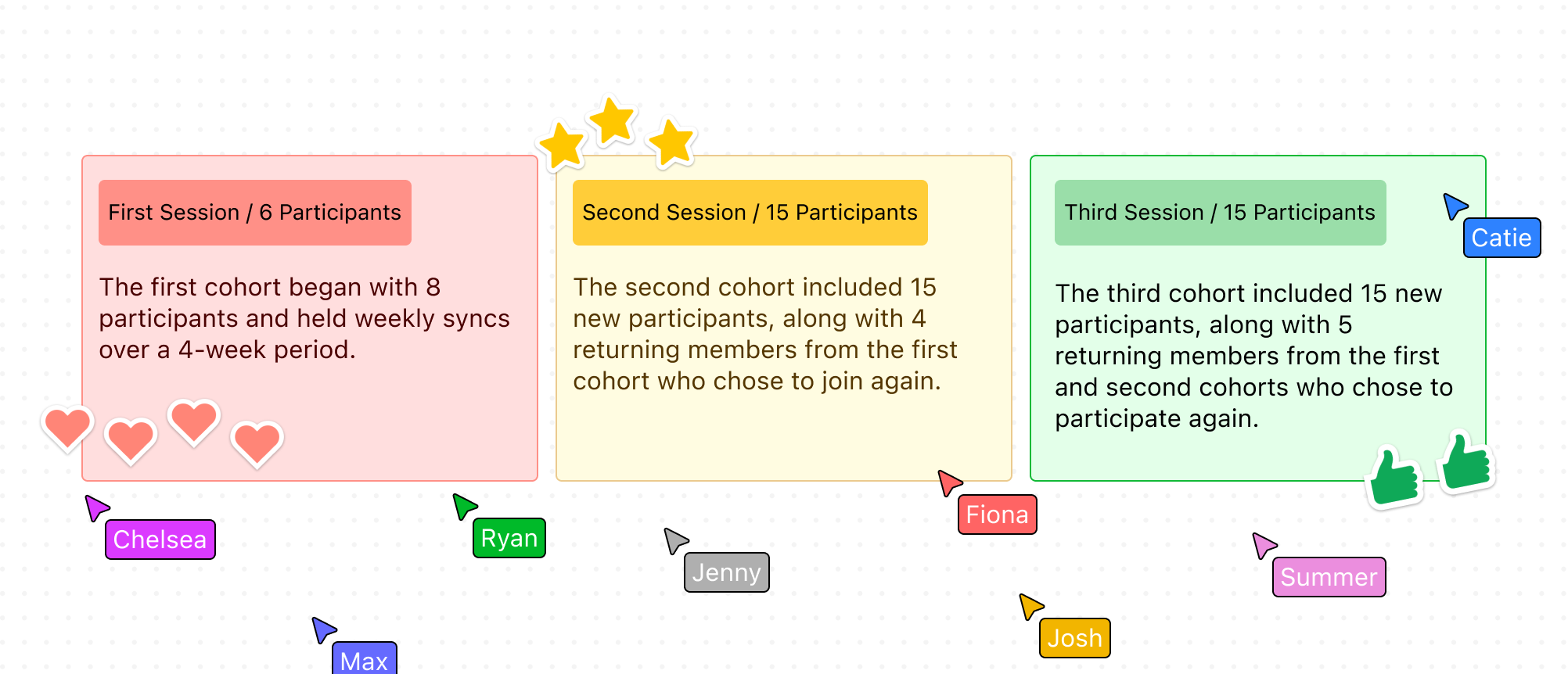
Our inaugural session on AI attracted eight designers and set the tone for future meetings. As word spread, participation grew, with over 30 designers engaging in subsequent sessions. The inclusion of facilitators not only enriched the learning experience but also empowered team members to take on leadership roles, further strengthening our design community.
Thank You.
If you’d like to discuss a project or just grab a coffee and chat, feel free to reach out—always happy to connect! 😊
hjw.chelsea@gmail.com
2024 January / Lead Designer
Building a Co-Learning Community for Designers at Slalom Build
Led a design study group at Slalom that grew from 8 to 30+ participants, fostering a strong culture of continuous learning and community.
How it Began
How Do We Stay Accountable to Our Own Growth?
As a senior experience designer, I found myself and my peers often reflecting on areas we wanted to improve—facilitation, coding, prototyping—but struggling to make space for it amidst fast-paced consulting work. It became clear that many of us were trying to grow in isolation. I began to wonder: what if we could grow together?
From a Shared Idea to a Designer Learning Community
I reached out to my colleague Ryan to share an idea: what if we created a lightweight co-learning group where designers could grow together? We were both looking to improve in areas like facilitation, Figma prototyping, and leveraging AI—but we also wondered what other designers were curious about. Rather than guessing, we decided to ask.
We shared it through Slalom’s monthly design announcements, and thanks to that channel, we saw about a 20% response rate—around 25 designers. The results pointed to a clear theme: AI was top of mind. This was early 2024, and with the rapid rise of generative tools, designers were eager to explore how AI could support their workflows.
Designing for Flexibility in a Fast-Paced Consulting Environment
Rather than over-engineering the format, we kept it lightweight and adaptable. Our first AI-focused session brought together 8 designers. Aware of the challenges in coordinating across time zones and client demands, we structured the sessions to be flexible and low-lift. To kick things off, Ryan and I organized a quick, focused workshop to guide the conversation in our first session.
The Role of Facilitators in Driving Productive Sessions
Recognizing the importance of structured guidance in collaborative settings, we incorporated facilitators into our sessions. Each session was led by a volunteer facilitator who guided discussions, encouraged participation, and ensured that sessions remained productive and inclusive.
Outcomes
Our inaugural session on AI attracted eight designers and set the tone for future meetings. As word spread, participation grew, with over 30 designers engaging in subsequent sessions. The inclusion of facilitators not only enriched the learning experience but also empowered team members to take on leadership roles, further strengthening our design community.
Thank You.
If you’d like to discuss a project or just grab a coffee and chat, feel free to reach out—always happy to connect! 😊
hjw.chelsea@gmail.com
2024 January / Lead Designer
Building a Co-Learning Community for Designers at Slalom Build
Led a design study group at Slalom that grew from 8 to 30+ participants, fostering a strong culture of continuous learning and community.
How it Began
How Do We Stay Accountable to Our Own Growth?
As a senior experience designer, I found myself and my peers often reflecting on areas we wanted to improve—facilitation, coding, prototyping—but struggling to make space for it amidst fast-paced consulting work. It became clear that many of us were trying to grow in isolation. I began to wonder: what if we could grow together?
From a Shared Idea to a Designer Learning Community
I reached out to my colleague Ryan to share an idea: what if we created a lightweight co-learning group where designers could grow together? We were both looking to improve in areas like facilitation, Figma prototyping, and leveraging AI—but we also wondered what other designers were curious about. Rather than guessing, we decided to ask.
We shared it through Slalom’s monthly design announcements, and thanks to that channel, we saw about a 20% response rate—around 25 designers. The results pointed to a clear theme: AI was top of mind. This was early 2024, and with the rapid rise of generative tools, designers were eager to explore how AI could support their workflows.
We shared it through Slalom’s monthly design announcements, and thanks to that channel, we saw about a 20% response rate—around 20 designers. The results pointed to a clear theme: AI was top of mind. This was early 2024, and with the rapid rise of generative tools, designers were eager to explore how AI could support their workflows.
Designing for Flexibility in a Fast-Paced Consulting Environment
Rather than over-engineering the format, we kept it lightweight and adaptable. Our first AI-focused session brought together 8 designers. Aware of the challenges in coordinating across time zones and client demands, we structured the sessions to be flexible and low-lift. To kick things off, Ryan and I organized a quick, focused workshop to guide the conversation in our first session.
The Role of Facilitators in Driving Productive Sessions
Recognizing the importance of structured guidance in collaborative settings, we incorporated facilitators into our sessions. Each session was led by a volunteer facilitator who guided discussions, encouraged participation, and ensured that sessions remained productive and inclusive.
Outcomes
Our inaugural session on AI attracted eight designers and set the tone for future meetings. As word spread, participation grew, with over 30 designers engaging in subsequent sessions. The inclusion of facilitators not only enriched the learning experience but also empowered team members to take on leadership roles, further strengthening our design community.
Thank You.
If you’d like to discuss a project or just grab a coffee and chat, feel free to reach out—always happy to connect! 😊
hjw.chelsea@gmail.com
2024 January / Lead Designer
Building a Co-Learning Community for Designers at Slalom Build
Led a design study group at Slalom that grew from 8 to 30+ participants, fostering a strong culture of continuous learning and community.
How it Began
How Do We Stay Accountable to Our Own Growth?
As a senior experience designer, I found myself and my peers often reflecting on areas we wanted to improve—facilitation, coding, prototyping—but struggling to make space for it amidst fast-paced consulting work. It became clear that many of us were trying to grow in isolation. I began to wonder: what if we could grow together?
From a Shared Idea to a Designer Learning Community
I reached out to my colleague Ryan to share an idea: what if we created a lightweight co-learning group where designers could grow together? We were both looking to improve in areas like facilitation, Figma prototyping, and leveraging AI—but we also wondered what other designers were curious about. Rather than guessing, we decided to ask.
We shared it through Slalom’s monthly design announcements, and thanks to that channel, we saw about a 20% response rate—around 25 designers. The results pointed to a clear theme: AI was top of mind. This was early 2024, and with the rapid rise of generative tools, designers were eager to explore how AI could support their workflows.
Designing for Flexibility in a Fast-Paced Consulting Environment
Rather than over-engineering the format, we kept it lightweight and adaptable. Our first AI-focused session brought together 8 designers. Aware of the challenges in coordinating across time zones and client demands, we structured the sessions to be flexible and low-lift. To kick things off, Ryan and I organized a quick, focused workshop to guide the conversation in our first session.
The Role of Facilitators in Driving Productive Sessions
Recognizing the importance of structured guidance in collaborative settings, we incorporated facilitators into our sessions. Each session was led by a volunteer facilitator who guided discussions, encouraged participation, and ensured that sessions remained productive and inclusive.
Outcomes
Our inaugural session on AI attracted eight designers and set the tone for future meetings. As word spread, participation grew, with over 30 designers engaging in subsequent sessions. The inclusion of facilitators not only enriched the learning experience but also empowered team members to take on leadership roles, further strengthening our design community.
Thank You.
If you’d like to discuss a project or just grab a coffee and chat, feel free to reach out—always happy to connect! 😊
hjw.chelsea@gmail.com